
茶々屋 @chachayaGame
【キメラアート】うろ覚えが生む、はちゃめちゃイラストが楽しいお絵かきパーティゲーム!人物やキャラのお題に対し、頭、目、口などのパーツに分かれて、それぞれが透明なキャンバスに描き、最後に重ねて1つのイラストにして当ててもらいます。
- Fun Little Wagakki Facts That Make “Demon S***er” Even More Interesting
- 2025/11/20 4:51
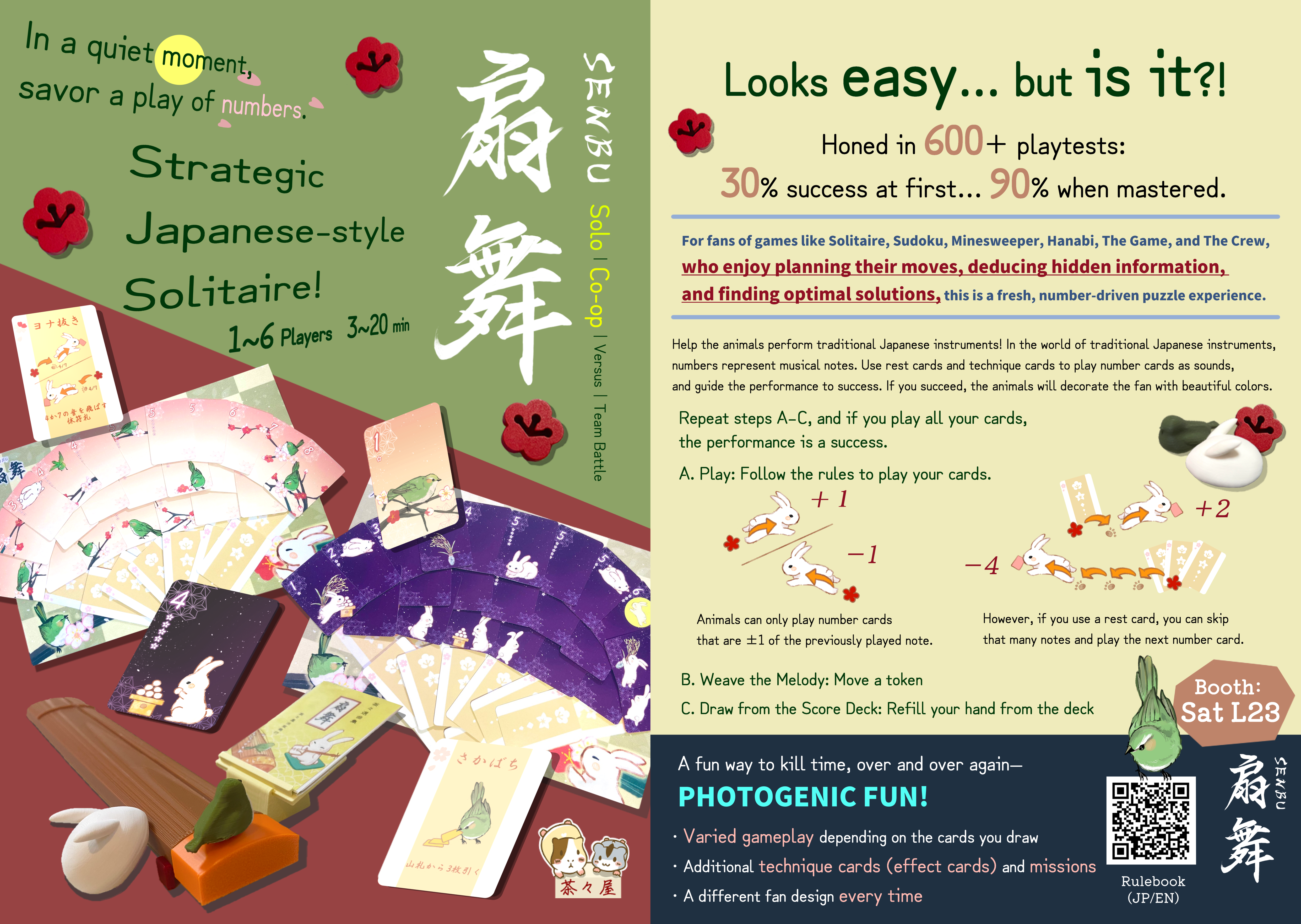
I'm excited to release “Senbu,” a board game themed around traditional Japanese musical instruments (wagakki).
Throughout the game, you’ll find countless details and nuances that only someone with 10 years of wagakki experience could include.
I’ve always wanted fans of Japanese-style anime to get to know wagakki better.
So today, I’d like to share some fun behind-the-scenes tidbits about the wagakki that appear in the popular anime “Demon S***er.”
From impressively accurate depictions to “Wait, that’s not right!” moments, we’ll cover a wide range of observations.
By the way, the rulebook of Senbu also includes wagakki fun facts like these, so be sure to check them out as you play.
✔ Well-Researched Details
● The “Yubisuri” on the Thunder Guy’s Shamisen (Entertainment District Arc – Ep. 2, around 15:02)
You can see a cloth ring-like item on the Thunder guy’s left-hand finger.
That’s a yubisuri, a friction-reducing cloth ring that allows shamisen players to slide their hand up and down the neck smoothly.
Without it, the left hand catches due to friction, since shamisen players move while keeping their fingertip touching the string.
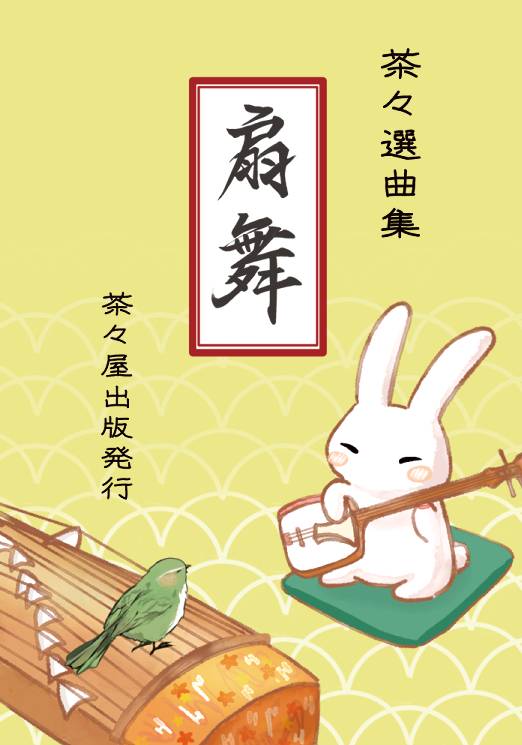
It’s essential for smooth playing — and fun fact, the little rabbit on the back of the Senbu cards is also wearing one!
● The Proper Way to Hold a Bachi (Ep. 2, around 15:02)
The shamisen bachi may look similar to a paddle, but it’s held in a very specific way.
You hook your pinky behind the handle and support it delicately, rather than gripping it firmly.
This level of accuracy shows careful research—or even the guidance of someone familiar with wagakki.
● Use of a Real Traditional Children’s Song (Hashira Training Arc – Ep. 8, 9:07)
In the ball-bouncing scene, the characters sing an actual traditional counting song.
This choice adds an unexpected level of authenticity, and its slightly haunting melody fits the quiet, tense mood of the scene.
Using a brighter, more playful tune would have ruined the atmosphere entirely.
✘ Things They Got Wrong
● The Genre of Music Played by the Thunder Guy (Ep. 2, around 13:55)
The background sound is pure Tsugaru shamisen.
However, Tsugaru shamisen is a northern folk style loved by commoners—
it would not be played in the pleasure district or traditional banquet settings.
In ozashiki performances, a much slower style is used, often represented with the onomatopoeia “chin-ton-shan.”
The manga uses “ben-ben!”, but that’s a Tsugaru shamisen sound, not an ozashiki one.
There’s even a theory that Tsugaru shamisen is fast because musicians played quickly to prevent their fingers from freezing.
Honestly, the fact they can move their fingers at all in that cold is already unbelievable.
● The Musical Notation Visualized by the Sound Hashira (Ep. 10, 15:19)
The flashing notation “壱 – 三 – 七 – 五 – 為” looks cool,
but the character “壱” is incorrect.
Koto notation uses: 一二三四五六七八九十斗為巾
And “為” is a correct, real symbol.
So why did “壱” appear?
Possibly because調絃 names (written outside the score) include words like “壱越平調子.”
Someone may have mistaken “壱” as a musical note.
But musically, there is no playable pitch called “壱.”
The correct notation should be “一.”
● The Stone Hashira’s Incorrect Shakuhachi Grip
In one of the manga’s bonus pages, the shakuhachi is drawn with reversed hands.
Most wind instruments — including the recorder — share similar hand placement, so this is simply a mistake.
● Missing Yubisuri in the Manga Bonus 4-Panel
In the main story and anime, the yubisuri is drawn correctly.
However, in the bonus 4-panel comic where the three rookies and the Sound Hashira form a band,
the Thunder guy plays without a yubisuri.
Looks like the detail was accidentally omitted in that particular scene.
Conclusion
As you can see, the creator of Senbu is a full-on wagakki nerd.
The game is packed with subtle references and fun details that will delight anyone familiar with traditional Japanese instruments.
But don’t worry — you don’t need any wagakki knowledge at all to enjoy the game.
For players who want to dive deeper, the rulebook includes explanations of every wagakki reference used in Senbu.
Feel free to explore and enjoy the rich world of wagakki at your own pace.
▼ Game Overview / Rulebook / Playtesters’ Impressions
https://gamemarket.jp/game/186057
▼ Pre-order Here
https://docs.google.com/forms/d/e/1FAIpQLSeyvzCdWoK-1_YYCd-iEe6nGeO_LvlOXtXSxgSXFdalB4J9xA/viewform